The final journey of NASA’s Space Shuttle Atlantis in 2011 marked a pivotal moment in human space exploration, symbolizing both the end of an era and the dawn of new possibilities. As millions watched with pride and nostalgia, this mission showcased decades of technological innovation, international collaboration, and resilience. But what lessons does this historic flight hold for our future beyond Earth? It emphasized that progress depends not only on technological milestones—like advanced thermal protection and robotic systems—but also on our collective spirit of discovery and cooperation. Atlantis’s last voyage was more than a farewell; it stood as a testament to human ambition, inspiring ongoing efforts to explore deeper into space, from the Moon to Mars. As we reflect on this milestone, it prompts us to ask: how will these achievements shape the next chapter of our cosmic journey? The legacy of Atlantis continues to motivate us to reach further, dream bigger, and pioneer beyond our horizons.
Quick Navigation

Celebrating the Historic Last Journey of Atlantis in 2011
In 2011, NASA’s Space Shuttle Atlantis embarked on its final journey into space, marking a historic milestone that resonated around the world. After nearly 30 years of pioneering human spaceflight, this mission symbolized both the end of an era and the beginning of new possibilities for exploration. Watching Atlantis lift off from Kennedy Space Center, millions experienced a mix of pride, nostalgia, and anticipation, aware that this would be the shuttle’s last voyage.
This mission wasn’t just about concluding the shuttle program; it was a celebration of decades of technological achievements and international collaboration. Atlantis’s last flight carried vital supplies, scientific instruments, and equipment needed to support the International Space Station’s ongoing research. It underscored how reusable spacecraft could sustain long-term projects and foster scientific innovation beyond Earth.
The significance of Atlantis’s final mission extends beyond its immediate objectives. It represented the culmination of technological progress—from advanced thermal protection systems to robotic arms capable of delicate repairs. These innovations demonstrated the shuttle’s role as a technological pioneer, pushing the boundaries of what was possible in spaceflight while setting the stage for future exploration efforts.
Moreover, this final flight carried a symbolic weight for NASA and the broader space community. It marked the closing chapter of a program that had defined human space exploration for nearly three decades. The mission prompted reflection on past accomplishments and sparked conversations about new approaches—such as increased partnerships with commercial space companies and international allies—aimed at reducing costs and accelerating progress beyond low Earth orbit.
Public reaction was heartfelt and widespread, with media coverage celebrating Atlantis’s historic role. Space enthusiasts, scientists, and policymakers shared a collective sense of pride and nostalgia, recognizing that this mission embodied human curiosity, resilience, and the relentless desire to explore beyond our planet. Atlantis’s last flight became a powerful reminder that exploration is driven by a fundamental human impulse to discover what lies beyond the horizon.
Why Atlantis’s Final Flight Marked a Turning Point in Space Exploration
The final mission of Atlantis in 2011 marked a defining moment not just for NASA, but for the entire landscape of human space exploration. It signified the end of the shuttle era, a period that had shaped decades of technological innovation, resilience, and international teamwork. This launch was more than a routine operation; it was a powerful symbol of progress, demonstrating how reusable spacecraft could support complex, long-term projects like maintaining the International Space Station.
Atlantis’s last flight carried critical supplies and scientific equipment essential for the station’s ongoing research. It showcased the shuttle’s vital role in enabling scientific breakthroughs that benefit life on Earth while expanding our understanding of space. The mission underscored the importance of international cooperation, as multiple nations relied on the station for technological advancements and shared scientific goals, reinforcing space exploration as a collective human effort.
The significance of this mission extended beyond its immediate objectives. It highlighted the technological milestones achieved over the shuttle program’s lifespan—from upgraded thermal protection systems to robotic arms capable of delicate repairs. These innovations set new standards for spacecraft safety and efficiency, influencing future spacecraft design and marking a legacy of continuous improvement and ingenuity.
Moreover, Atlantis’s final journey embodied the resilience and adaptability that have become hallmarks of NASA’s approach to exploration. As the shuttle era concluded, it prompted reflection on past successes while encouraging new models of cooperation—particularly with commercial partners and international allies. This transition aimed to reduce costs, accelerate progress, and open new pathways beyond low Earth orbit, shaping the future of human spaceflight.
Public and global reactions reflected the mission’s symbolic weight. Media coverage celebrated Atlantis’s achievements, while space enthusiasts, scientists, and policymakers recognized this as a moment of collective pride. The flight became a poignant reminder of human curiosity and resilience, illustrating that exploration is driven by an innate desire to discover what lies beyond our planet’s horizon.
In the end, Atlantis’s final mission was more than a farewell; it was a powerful statement about human potential. It challenged us to see endings as beginnings and reminded us that the spirit of exploration—fueled by innovation, collaboration, and determination—continues to propel us forward into new frontiers.
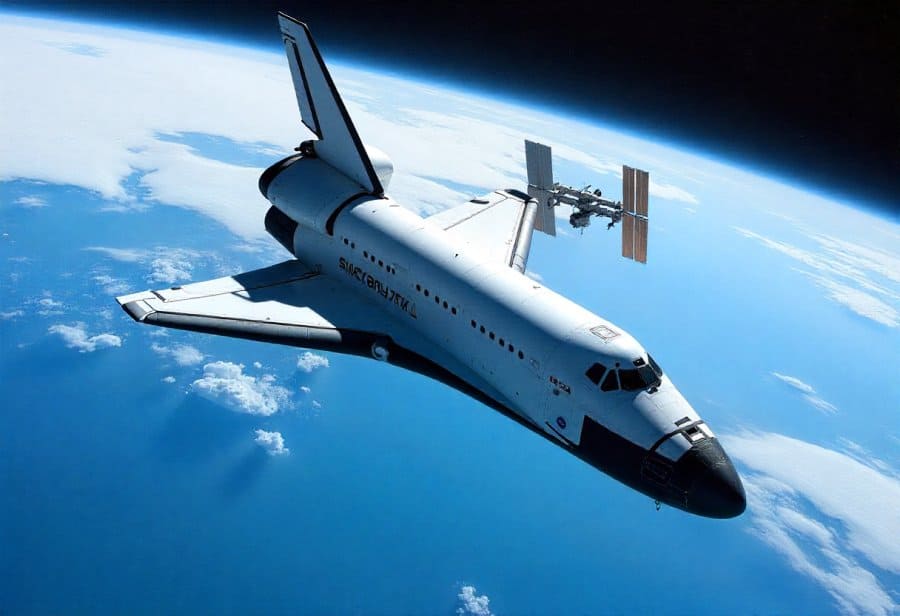
Atlantis’s Enduring Legacy: Shaping NASA’s Spacecraft and Global Collaboration
The legacy of Atlantis within NASA’s shuttle program extends far beyond its individual missions; it embodies the spirit of innovation, resilience, and adaptability that defined an era of human spaceflight. As one of the most reliable orbiters, Atlantis played a crucial role in constructing and maintaining the International Space Station, showcasing the shuttle’s versatility in deploying satellites, repairing space telescopes, and supporting scientific experiments. These achievements not only expanded our reach into space but also set new standards for spacecraft safety and efficiency, thanks to technological advancements like upgraded thermal protection systems and precise robotic arms.
Atlantis’s contributions fostered unprecedented international collaboration. Its missions supported the assembly and continuous operation of the space station, transforming it into a permanent laboratory for scientific research. This collective effort demonstrated that space exploration is a shared human endeavor, transcending national borders, and emphasizing the importance of global cooperation in achieving scientific and exploratory milestones. The shuttle’s ability to facilitate long-term international partnerships remains a defining aspect of its legacy.
Beyond technology and collaboration, Atlantis’s influence lies in the inspiration it provided. Its reliability and success became symbols of human ingenuity and perseverance, inspiring generations of scientists, engineers, and explorers. The missions embodied the relentless pursuit of knowledge and the willingness to push technological boundaries, shaping the future of space exploration. Its legacy fuels ongoing efforts to develop new spacecraft and explore beyond low Earth orbit, including ambitions for Moon and Mars missions.
Furthermore, Atlantis’s story highlights the importance of continuous learning and innovation. Each mission built upon previous successes, refining techniques and advancing capabilities that inform current and future exploration strategies. The shuttle’s adaptability and technological breakthroughs set a foundation that continues to influence NASA’s approach to spaceflight, emphasizing safety, efficiency, and international teamwork.
In sum, Atlantis’s enduring impact is woven into the fabric of NASA’s history. It stands as a testament to what human curiosity, resilience, and collaborative effort can achieve. As we venture into new frontiers, the lessons and innovations from Atlantis’s career will remain guiding stars—reminding us that the quest for discovery is ongoing, and the legacy of this iconic orbiter will continue to inspire future generations to reach further into the cosmos.
The end of the shuttle program marked a significant milestone in space exploration, prompting reflection on its lasting influence. Understanding the full scope of Atlantis’s contributions helps us appreciate how its legacy continues to shape current and future missions. For a deeper look into this history, see the legacy of atlantis within nasa’s shuttle program history.
Reflections on the Significance and Inspiration Behind Atlantis’s Last Mission
The final flight of Atlantis symbolizes more than just the end of a spacecraft’s operational life; it stands as a powerful emblem of human achievement and resilience. For NASA, it marks the culmination of decades driven by innovation, teamwork, and perseverance—proof that ambitious exploration can inspire generations and push boundaries. This mission wasn’t merely a farewell to the shuttle program; it celebrated the incredible progress made and laid a foundation for future endeavors. It reminds us that every successful mission builds upon the last, fueling our collective curiosity and desire to discover what lies beyond.
For scientists and engineers, Atlantis’s last journey highlights the importance of technological progress. The innovations demonstrated—such as improved thermal protection systems and more capable robotic arms—set new standards for safety and efficiency. These advancements aren’t just about one mission; they shape the development of future spacecraft and exploration strategies. The mission underscores that pushing technological limits is essential for venturing into the unknown and expanding our reach into space.
Space enthusiasts around the world see Atlantis’s final flight as a poignant symbol of human curiosity and the indomitable spirit of exploration. It stirred a shared sense of pride and nostalgia, reminding us of the dreams that have propelled space exploration since its earliest days. The launch became a collective moment of wonder, reinforcing that exploration is rooted in our innate desire to understand what’s beyond our planet’s horizon.
This flight also carries a deeper message about international collaboration. Atlantis’s cargo supported the ongoing work of the International Space Station—a testament to what nations can accomplish when working together. It embodies the idea that space exploration is no longer solely a national pursuit but a shared human journey. This spirit of cooperation emphasizes that scientific discovery and exploration are endeavors that transcend borders, uniting us in a common quest.
The mission’s symbolic significance challenges us to see endings as beginnings. While the shuttle era concluded, the innovations and partnerships it fostered continue to influence future exploration. It pushed NASA to adopt new models—embracing commercial partnerships and international alliances—aimed at reducing costs and accelerating progress. Atlantis’s final flight, therefore, stands as a reminder that resilience and adaptability are key to reaching new frontiers.
The emotional weight of Atlantis’s last journey resonates strongly with all who watch from afar. It’s a testament to what humans can accomplish when determination meets ingenuity. The mission inspires us to dream bigger, to aim higher, and to believe that the pursuit of knowledge knows no limits. It signifies hope and the unyielding drive to explore, reminding us that each ending is simply a prelude to new adventures.
In the end, Atlantis’s final flight embodies the enduring human spirit of discovery. It challenges us to carry forward the lessons learned, the innovations developed, and the collaborative spirit that made these achievements possible. Its legacy is woven into the fabric of space exploration—an inspiring reminder that curiosity, resilience, and unity are the true engines of progress. As we look to the future, the story of Atlantis continues to motivate us to reach further and explore deeper, ensuring that the quest for discovery never truly ends.

Honoring the Spirit of Discovery: The Last Flight of Atlantis and Its Lasting Impact
The final flight of Atlantis stands as a powerful symbol of human achievement and resilience. It marks the culmination of decades driven by innovation, teamwork, and perseverance—proof that ambitious exploration can inspire generations and push boundaries beyond what we thought possible. This mission wasn’t merely a farewell to the shuttle program; it celebrated the incredible progress made and laid a foundation for future endeavors. It reminds us that every successful mission builds upon the last, fueling our collective curiosity and desire to discover what lies beyond.
For scientists and engineers, Atlantis’s last journey highlights the importance of technological progress. The innovations demonstrated—such as improved thermal protection systems and more capable robotic arms—set new standards for safety and efficiency. These advancements aren’t just about one mission; they shape the development of future spacecraft and exploration strategies. The mission underscores that pushing technological limits is essential for venturing into the unknown and expanding our reach into space.
Space enthusiasts around the world see Atlantis’s final flight as a poignant symbol of human curiosity and the indomitable spirit of exploration. It stirred a shared sense of pride and nostalgia, reminding us of the dreams that have propelled space exploration since its earliest days. The launch became a collective moment of wonder, reinforcing that exploration is rooted in our innate desire to understand what’s beyond our planet’s horizon.
This flight also carries a deeper message about international collaboration. Atlantis’s cargo supported the ongoing work of the International Space Station—a testament to what nations can accomplish when working together. It embodies the idea that space exploration is no longer solely a national pursuit but a shared human journey. This spirit of cooperation emphasizes that scientific discovery and exploration are endeavors that transcend borders, uniting us in a common quest.
The mission’s symbolic significance challenges us to see endings as beginnings. While the shuttle era concluded, the innovations and partnerships it fostered continue to influence future exploration. It pushed NASA to adopt new models—embracing commercial partnerships and international alliances—aimed at reducing costs and accelerating progress. Atlantis’s final flight reminds us that resilience and adaptability are vital in reaching new frontiers.
Ultimately, Atlantis’s last journey embodies the enduring human spirit of discovery. It demonstrates that curiosity, resilience, and unity are the true engines of progress. Its legacy inspires us to dream bigger, aim higher, and explore further. As we look ahead to new missions and uncharted territories, the story of Atlantis will continue to motivate generations to push beyond the known, ensuring that the quest for discovery remains unstoppable.