Why are Americans irresistibly drawn to charismatic figures promising simple solutions amidst chaos? This exploration reveals a long-standing tradition of spectacle— from 19th-century medicine shows like Clark Stanley’s rattlesnake demonstrations to modern political rallies filled with theatrical flair. These performances tap into deep-seated desires for reassurance, identity, and quick fixes, often overriding rational judgment with emotional resonance. Leaders like Donald Trump masterfully craft immersive experiences that forge strong emotional bonds, transforming politics into entertainment and loyalty into spectacle. But what does this say about our collective psyche? Are we seeking genuine cures, or are we seduced by illusion? As media amplifies these performances, understanding the psychology behind spectacle becomes vital—helping us develop critical thinking and resilience against superficial narratives. Recognizing how influence is often rooted in showmanship rather than substance prompts vital reflection: in a complex world, do we truly want authentic solutions, or are we content to buy into the spectacle?
Table of Contents
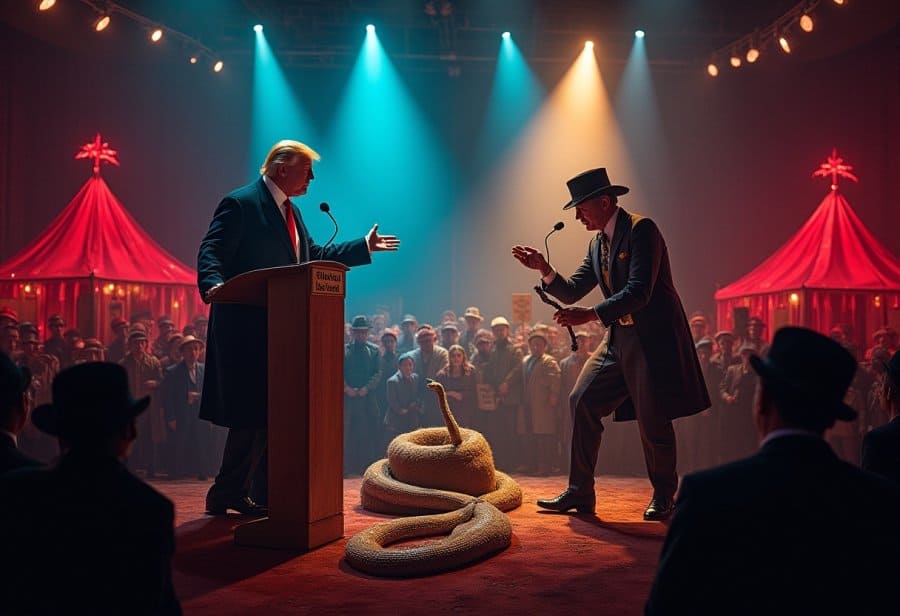
Unmasking the Allure: Why Americans Chase Charismatic Figures and Simple Solutions
Why are so many Americans drawn to charismatic figures who promise simple solutions to complicated problems? It’s a question that cuts straight to the heart of human nature and cultural history. From political rallies to quick-fix schemes, there’s a persistent appeal in spectacle—loud, flashy, emotionally charged performances—that captures attention and stirs deep feelings. This isn’t new; showmanship has long been woven into the fabric of American culture, where entertainment and persuasion often blur together.
Our craving for clarity and reassurance fuels this fascination. When life feels uncertain or overwhelming, many of us seek straightforward answers and confident leaders who seem to hold the key. Charismatic figures tap into that desire by offering quick fixes—whether through catchy slogans, dramatic gestures, or larger-than-life personas—that create a sense of certainty amid chaos. They promise relief and hope, often replacing critical thinking with emotional resonance.
Throughout history, spectacle has been a powerful tool for influence. From 19th-century medicine shows to modern political campaigns, leaders have understood that emotional engagement can serve as a shortcut to trust and loyalty. These performances evoke primal instincts—belonging, fear, hope—and turn persuasion into a shared experience that feels more real than facts alone. This pattern reveals a deep-rooted tendency: in turbulent times, people prefer comforting illusions over complex truths.
This enduring attraction speaks to a universal aspect of human psychology. In a world full of uncertainty, the allure of simple, confident answers remains strong. Whether it’s snake oil or political promises, the promise of a quick, easy fix appeals to our collective need for stability, identity, and hope—sometimes at the expense of truth. Recognizing this helps us understand why spectacle continues to captivate us, even when the cures offered are just illusions.
From Medicine Shows to Political Rallies: The Historical Roots of American Showmanship
The roots of American showmanship run deep, stretching back to the 19th century, when traveling medicine shows became a common sight across towns and cities. These weren’t just health demonstrations—they were theatrical spectacles designed to entertain as much as to persuade. Charismatic figures like Clark Stanley, known as the “Rattlesnake King,” turned their acts into performances that blurred the line between entertainment and deception. With dramatic flair, Stanley pulled rattlesnakes from sacks, sliced them open before a captivated crowd, and bottled the fat he claimed was a miracle cure. His displays drew crowds eager for quick relief, even if the remedies were dubious.
These medicine shows established a pattern: using showmanship to sell ideas, products, and promises. The theatrical flair wasn’t accidental; it was a calculated tactic to grab attention and quickly build trust. Performers projected rugged authenticity and confidence, making their claims seem more convincing. Spectacle became a shortcut to influence, transforming simple sales pitches into memorable performances that stuck with audiences long after the show ended.
As the 20th century unfolded, this tradition evolved into political rallies and mass gatherings. Leaders like Franklin D. Roosevelt and Huey Long understood that stirring speeches alone weren’t enough—they needed visual drama and emotional cues to rally support. Campaigns became performances, with staging, slogans, and theatrical gestures designed to evoke primal instincts—belonging, fear, hope—turning politics into entertainment that resonated emotionally.
American showmanship thus grew from these early roots, embedding itself into the national psyche. Whether selling patent medicines or rallying voters, the use of performance, storytelling, and identity became essential tools for influence. Leaders understood that emotional engagement and spectacle could forge trust and loyalty, turning persuasion into a shared experience that transcended mere words. This legacy continues to shape how influential figures connect with their audiences today, blending entertainment with persuasion seamlessly.
Psychology and Culture: Why Society Craves Simplicity and Worships Charisma
Humans naturally seek simple answers, especially when faced with chaos or uncertainty. During times of economic turmoil, social upheaval, or personal fear, we instinctively gravitate toward stories that offer clarity and reassurance. Charismatic figures tend to exploit this trait by presenting themselves as the sole source of straightforward solutions, their confident tone making them seem trustworthy even when their ideas lack depth or evidence. This craving for certainty is wired into our brains, which prefer quick, digestible narratives over complex truths.
Cultural patterns reinforce this tendency. Throughout American history, showmen and entertainers have used spectacle to persuade and influence. Political rallies, media events, and public demonstrations often resemble performances designed to evoke strong emotions and foster loyalty. This tradition shapes societal expectations—viewing influence as something rooted in drama, visual cues, and emotional appeals rather than facts alone. It’s a cycle that feeds on and reinforces our love for entertainment-driven persuasion.
People are especially drawn to leaders who seem authentic or relatable, even if that authenticity is carefully crafted. The illusion of honesty, strength, and conviction creates an emotional bond that overrides rational judgment. Charismatic figures project confidence and certainty, providing a sense of stability in uncertain times. This emotional connection often feels more powerful than logical reasoning, leading supporters to accept simple solutions that address their anxieties and hopes.
Cognitive biases amplify these effects. We tend to trust people who speak with conviction and dismiss those who hesitate. Confirmation bias pushes us to seek information that aligns with our existing beliefs, making us more receptive to charismatic leaders who reinforce our worldview. This mental shortcut deepens loyalty and makes critical thinking more difficult, as emotional bonds and identity often overshadow rational analysis.
Supporters often see these figures as embodying shared values or cultural myths, fostering a sense of belonging. These emotional ties deepen loyalty, making questioning or skepticism feel like a betrayal of the group. This dynamic keeps people committed to narratives that feel personal and meaningful, even if they’re superficial or misleading.
All these factors—psychological biases, cultural patterns, and the desire for certainty—combine to make spectacle-driven figures especially persuasive. They craft immersive experiences that satisfy our fundamental needs for reassurance, identity, and belonging. Recognizing these drivers helps us understand why spectacle continues to dominate in American society, even when the promises are just illusions.
Understanding the roots of such persuasive tactics also involves recognizing historical examples of deception. The phrase ‘snake oil,’ for instance, has become a symbol of fraud due to its association with false promises and charlatanism. To explore how these types of scams have persisted and evolved over time, you can read more about how Snake Oil Became a Symbol of Fraud and the lessons they hold for today’s society.
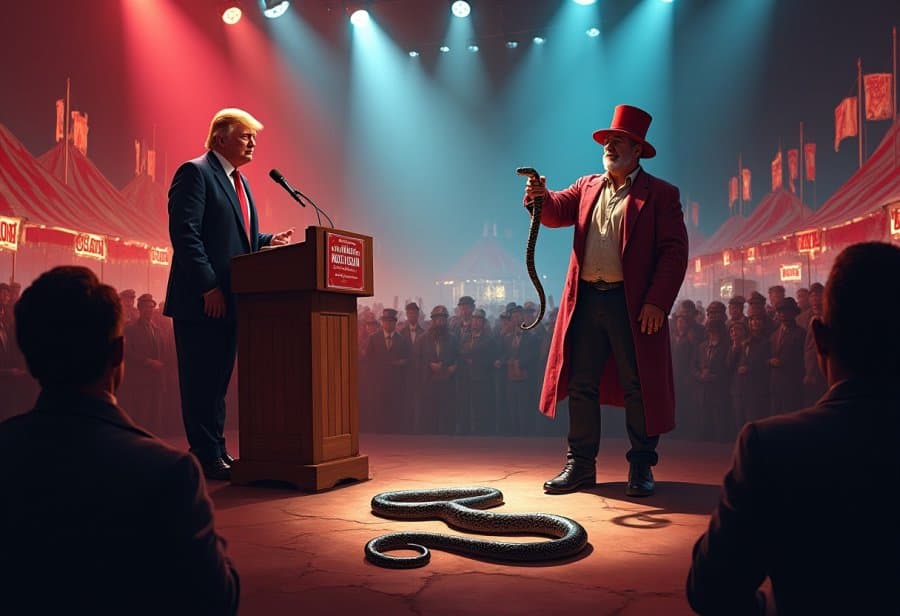
Showmanship in Action: Cases from Clark Stanley to Donald Trump
Throughout American history, showmanship has been a powerful force shaping public perception and influence. One of the earliest striking examples is Clark Stanley, the “Rattlesnake King,” who rose to fame at the 1893 World’s Columbian Exposition in Chicago. With theatrical flair, he pulled rattlesnakes from sacks, sliced them open before a captivated crowd, and bottled the fat he claimed was a miracle cure. His dramatic demonstrations blurred the line between entertainment and deception, drawing crowds eager for quick relief despite dubious remedies. These performances established a pattern: spectacle used to sell ideas, products, and promises through emotional engagement rather than evidence.
As the 20th century unfolded, this tradition evolved into political rallies and mass gatherings. Leaders like Franklin D. Roosevelt and Huey Long understood that stirring speeches alone weren’t enough—they needed visual drama and emotional cues to rally support. Campaigns became performances, with staging, slogans, and theatrical gestures designed to evoke primal instincts—belonging, fear, hope—transforming politics into emotional entertainment. The theatricality of these events fostered a sense of shared identity and loyalty, often overshadowing substantive policy discussions.
Moving into the modern era, figures like Donald Trump exemplify this legacy. His campaign rallies, packed with loud chants, dramatic staging, and personal charisma, became immersive experiences akin to theatrical performances. Trump’s promises—“Build the wall,” “Drain the swamp”—mirrored Stanley’s snake oil slogans: simple, catchy, and emotionally charged. Both understood that crafting a compelling persona and delivering a spectacle could override skepticism, turning politics into a shared ritual.
The power of spectacle isn’t limited to politics. It’s embedded in the American psyche—whether selling miracle cures or rallying voters—highlighting a deep-rooted desire for reassurance and belonging. These figures create identities that feel authentic and protective, tapping into collective anxieties with sweeping, simple promises. Their performances build emotional bonds that often feel more real than facts, illustrating how influence is shaped as much by storytelling and showmanship as by substance.
Spectacle’s Impact: How Entertainment Shapes Democracy and Public Discourse
The obsession with spectacle in American politics and culture has reshaped how democracy functions today. When leaders prioritize entertainment and emotional appeals over substance, it becomes difficult for voters to grasp the complexities behind policies and issues. Campaigns often turn into performances, with slogans, visuals, and theatrics taking center stage, while detailed policy discussions fade into the background. This shift encourages emotional reactions and identity-driven voting, making misinformation and oversimplification more tempting and widespread.
Charismatic figures who excel at spectacle foster loyalty rooted in emotion rather than facts. Their ability to craft compelling personas creates bonds that feel authentic and protective, even if their messages lack depth. This dynamic deepens polarization, as supporters cling to emotional narratives and shared identities, often dismissing contrary evidence. As a result, rational debate gives way to tribal loyalty, weakening the foundation of informed democratic participation.
Spectacle also paves the way for populism and demagoguery. Leaders manipulate fears, hopes, and resentments through dramatic gestures and vivid storytelling—often sidestepping real solutions. When campaigns focus on theatrics rather than policy, voters may become more susceptible to false promises and misinformation. Social media amplifies this trend, spreading captivating visuals and emotional appeals instantly, often at the expense of nuance and truth.
Counteracting these trends requires increased media literacy and critical thinking. Educating citizens to recognize manipulation techniques, question emotional appeals, and verify claims can diminish spectacle’s influence. Promoting open dialogue and diverse perspectives helps communities resist superficial narratives and foster genuine understanding. Building resilience against spectacle ensures that democratic processes remain rooted in substance, not show.
Fostering a culture that values honesty, transparency, and critical inquiry is essential. Leaders who emphasize clarity and integrity build trust, while citizens demanding substantial engagement help preserve democratic integrity. Recognizing spectacle’s power enables us to see beyond shiny illusions, encouraging us to seek authentic solutions and meaningful dialogue.
This awareness is vital in safeguarding democracy’s future. As emotional appeals and visual drama continue to dominate public discourse, cultivating skepticism and curiosity becomes more important than ever. When we question what we see and hear, we can better distinguish between entertainment and truth, strengthening the pillars of informed participation. Only through this effort can democracy thrive amid a landscape increasingly saturated with spectacle.
Counteracting Manipulation: Strategies to Foster Critical Thinking and Media Literacy
Countering the allure of spectacle requires a proactive approach to education that fosters critical thinking and media literacy. Teaching people how to analyze messages, spot persuasive tactics, and question motives can significantly reduce susceptibility to superficial appeals. For example, highlighting common manipulation techniques like exaggerated gestures, emotional language, or dramatic staging helps audiences see beyond entertainment and engage more thoughtfully with content.
Schools and community programs play a vital role in developing these skills. Incorporating media literacy into curricula teaches students to evaluate sources, verify claims, and differentiate between entertainment and credible information. Adults benefit from workshops and public awareness campaigns that demystify campaign strategies, advertising tricks, and social media manipulation, making it easier to recognize when messages are designed to deceive rather than inform.
Creating spaces for open dialogue encourages communities to practice skepticism in a safe environment. When people share perspectives and analyze how emotional stories or visuals influence opinions, they strengthen their ability to think critically. Supporting fact-checking resources and providing tools for verifying claims further empowers individuals to see through superficial narratives.
Grassroots efforts are especially effective because they build local resilience against manipulation. Community groups that promote media literacy foster environments where questioning and curiosity are valued. When skepticism becomes a shared habit, citizens are less vulnerable to influence and better equipped to engage in genuine, informed conversations.
Encouraging ongoing education and dialogue cultivates a public that prioritizes substance over style. As critical thinking spreads, society becomes more resistant to superficial appeals, fostering a healthier democratic environment. Leaders who emphasize transparency and honesty, combined with an informed citizenry, help ensure that influence remains rooted in truth and understanding rather than spectacle.
Fostering these skills isn’t a one-time effort but an ongoing process. Media landscapes evolve rapidly, and so must our approaches to teaching discernment. Equipping individuals with the tools to question, analyze, and reflect ensures they can navigate a world saturated with entertainment-driven messages while maintaining a firm grasp on reality.
By embedding critical thinking into everyday conversations, education, and community life, we create a culture less swayed by superficial spectacle. When people learn to see beyond the surface, they can better judge the authenticity of leaders, messages, and campaigns. This shift not only strengthens individual agency but also fortifies the foundations of a resilient democracy.
Building awareness about spectacle’s influence ultimately empowers us to demand more substance and integrity from public discourse. When skepticism becomes second nature, the allure of showmanship wanes, revealing the importance of genuine, meaningful engagement. In this way, education becomes a vital weapon against superficial influence, helping society move toward a more honest and informed future.
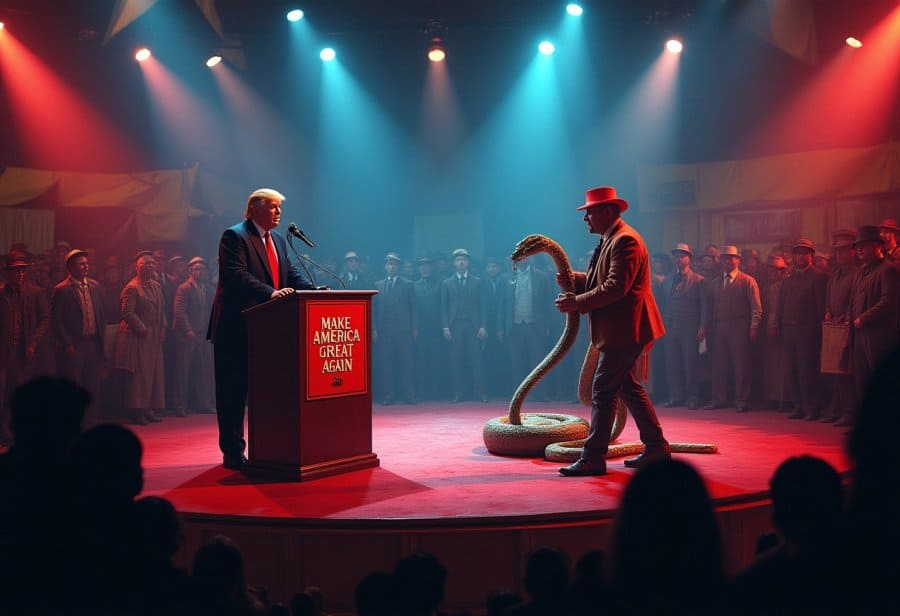
Reflections on Spectacle: Recognizing Its Role in Shaping American Culture and Democracy
Understanding spectacle in American culture reveals how influence and loyalty are shaped through emotion, storytelling, and performance. From 19th-century medicine shows to today’s political rallies, the core appeal remains rooted in our need for reassurance, identity, and simplicity amid chaos. Recognizing this pattern helps us see beyond surface entertainment and approach messages with a sharper, more discerning eye. It’s a vital step in safeguarding democracy, which depends on an informed and engaged public capable of seeing through illusions.
Charismatic figures have long thrived by blending emotion, identity, and showmanship. Whether selling snake oil or rallying supporters, they tap into universal human desires—belonging, hope, and quick fixes—often turning superficial promises into powerful symbols of trust. Their success isn’t just about the content of their message but how they craft immersive experiences that resonate deeply, sometimes overriding rational judgment. This pattern persists because it fulfills fundamental needs, especially during uncertain times.
Modern media amplifies spectacle’s reach, spreading vivid visuals and emotional appeals instantly and broadly. This environment encourages passive consumption rather than active critical thinking, making misinformation and oversimplification more tempting and accessible. The public’s tendency to accept superficial narratives over complex truths challenges the very foundation of informed democratic participation. To counter this, fostering media literacy and skepticism becomes essential.
Encouraging curiosity, questioning, and dialogue helps build resilience against manipulation. When communities learn to analyze messages critically and demand transparency, they can resist superficial appeals and prioritize genuine understanding. Leaders and citizens alike must value honesty and clarity, focusing on substance over style. This shift requires ongoing effort but is crucial to preserving democratic integrity in a landscape dominated by spectacle.
By understanding how spectacle shapes perceptions, we equip ourselves to navigate a world where entertainment often masks reality. Recognizing these influences allows us to demand authenticity and deepen our engagement with truth. Moving beyond shiny illusions, we can foster a society rooted in genuine dialogue, critical thinking, and trust—where influence is earned through integrity, not spectacle.